
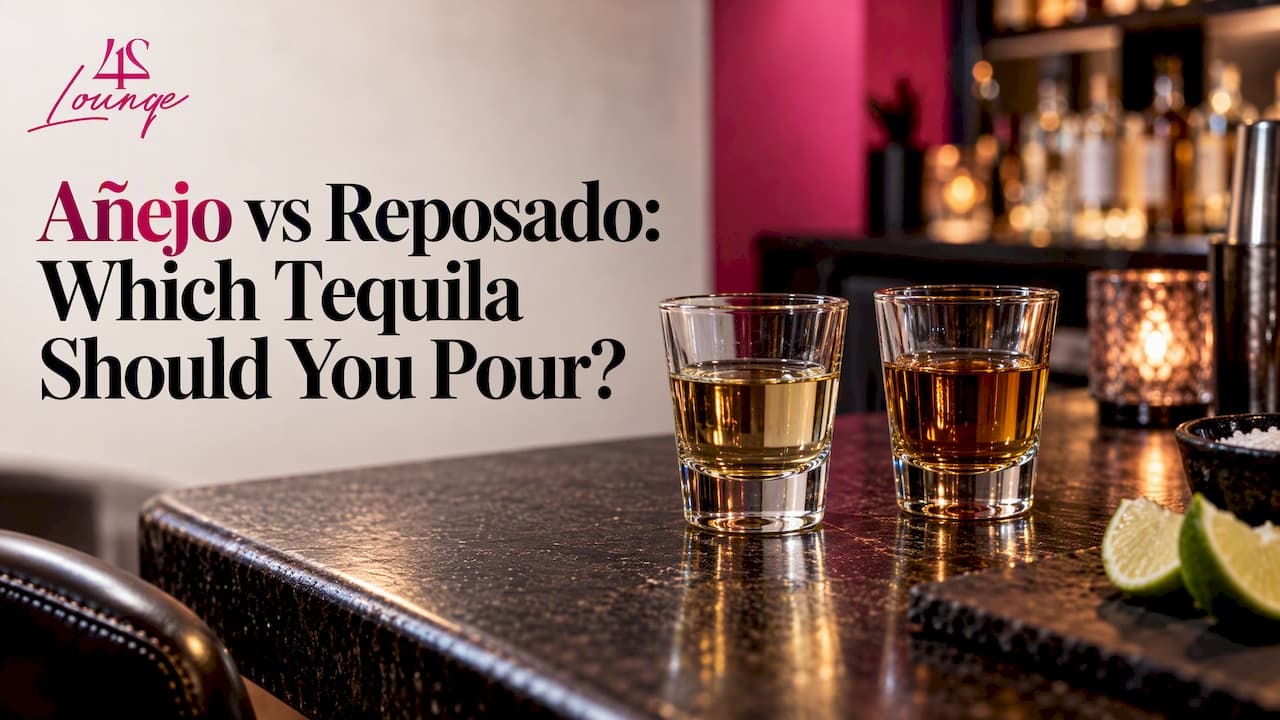
Reposado is the tequila rested in oak for two months up to a year. Añejo is aged longer, from one year up to three. Reposado stays brighter and closer to the agave. Añejo goes darker, richer, more oak. Pick reposado for sipping and mixing. Pick añejo when you want to slow the night down and savor.
That's the short version. Below: the official rules, what each tastes like, what you'll pay, and how to order at the table. Tu noche, your pour.
TL;DR
- Reposado: aged at least two months and up to a year in oak. Light straw color, vanilla and caramel, still lively. Great for sipping or cocktails.
- Añejo: aged at least one year, up to three. Deeper amber, baking spice, dried fruit, more barrel. Made for slow sipping.
- Price: añejo usually costs more because it spends longer in the barrel. The gap is often modest on the shelf.
- Blanco is the unaged, agave-forward starting point. Extra añejo sits above añejo.
- Out for the night? Choose by the vibe: reposado for the group, añejo for the toast.
Table of Contents
- The Five Classes of Tequila, in Plain English
- Reposado vs Añejo: The Aging Rules
- How They Taste: Brighter vs Deeper
- Añejo vs Reposado: Sipping or Mixing?
- Blanco vs Reposado: Should You Skip Straight to Añejo?
- Añejo vs Extra Añejo
- Is añejo more expensive than reposado?
- Casamigos vs Don Julio: Reposado and Añejo Compared
- What to Look for on the Label
- How to Order at the Lounge
- Our Take at 412 Lounge
- Plan Your Night at 412 Lounge
- FAQ
- Sources
The Five Classes of Tequila, in Plain English
Before añejo vs reposado makes sense, you need the full ladder. Mexico's regulator, the Consejo Regulador del Tequila, recognizes five classes: Blanco (Silver), Joven (Gold), Reposado (Aged), Añejo (Extra Aged), and Extra Añejo (Ultra Aged). The official standard, NOM-006-SCFI-2012, defines the same five.
Here's how they line up:
| Class | Time in oak | What you'll notice |
|---|---|---|
| Blanco | Unaged or under two months | Pure agave, citrus, pepper, vegetal |
| Reposado | Two months to one year | Light straw color, vanilla, caramel, agave still up front |
| Añejo | One to three years | Amber color, baking spice, dried fruit, oak depth |
| Extra añejo | Longer than añejo | Darkest, most barrel-driven, built for slow sipping |
The time ranges for blanco, reposado and añejo follow this breakdown of the three classes. Joven (gold) is typically a blend, so it sits outside the simple aging ladder.
One word you'll hear: reposado means "rested." That's the idea. The tequila rests in wood just long enough to pick up color and softness, without losing the agave.
Reposado vs Añejo: The Aging Rules
The law is specific, and that's what makes the labels trustworthy.
Reposado must mature in direct contact with oak or Encino oak containers for at least two months. Commonly it's described as resting from two months up to a year.
Añejo must mature in oak or Encino oak containers with a maximum capacity of 600 liters for at least one year. Commonly it's described as running one to three years.
What does that mean for you?
- Two months is a floor, not a promise. A reposado can rest for two months or eleven. Same word on the label, very different bottle.
- Barrel size matters for añejo. The smaller the barrel, the more wood contact per drop of tequila.
- Age statements on the bottle help. Some brands print the time in the barrel. When they do, use it. A six-month reposado and a ten-month reposado are not the same pour.
A quick example from the bottles people actually see: Casamigos lists its Reposado as aged six months and its Añejo as aged 12 months. That's a clean illustration of the line between the two classes.
How They Taste: Brighter vs Deeper
Reposado keeps the agave punch. Expect a light straw color and notes of vanilla and caramel layered over the sweet, peppery spirit underneath. Bartenders like it because it's the bridge: bright agave with a little oak.
Añejo leans into the barrel. You'll often find vanilla, caramel, baking spices and dried fruit. It drinks smoother and heavier. The same Food & Wine piece quotes a mixologist who says añejo leans heavily into barrel-derived complexity, while reposado keeps that agave punch.
Try this at home or at the table:
- Pour each into a small glass. Look at the color first. Añejo is darker.
- Smell before you sip. Reposado smells like agave with a hint of sweetness. Añejo smells like wood, spice and fruit.
- Sip slowly. Notice how long the finish lasts. Añejo usually lingers longer.
The best way to enjoy aged tequilas, according to experts quoted by Food & Wine, is in a snifter at room temperature, so the barrel aromas can open up.
Añejo vs Reposado: Sipping or Mixing?
Both work. Each shines in a different spot.
Reposado is the all-rounder. It's versatile for sipping or mixing. Use it in a Paloma, a smoky margarita, or just on the rocks with a lime wedge nearby.
Añejo is typically a sipping tequila, but it can stand in for whiskey in cocktails. Think old fashioned with añejo instead of bourbon. Think neat pour, no ice, no rush.
Blanco is the cocktail workhorse. Its citrus and pepper notes suit a Margarita or a Paloma.
A simple rule:
- Group round, shots, mixed drinks: blanco or reposado.
- A toast, a birthday pour, a slow conversation: añejo.
- Not sure: reposado. Always a safe call.
Still deciding between tequila and other spirits for the night? Our guide to picking your pour: vodka vs tequila walks through it.

Blanco vs Reposado: Should You Skip Straight to Añejo?
Many people searching añejo vs reposado are really asking about the step before it. Blanco vs reposado is the bigger jump in character for newcomers.
Blanco may be aged under two months or not at all. It's transparent, free of additives and agave-forward, with vegetal, citrus and peppery flavors. Patrón describes blanco as a pure, vibrant agave taste, while añejo develops a richer, more complex woody flavor.
If you're moving up from blanco, here's a path that works:
- Start with a good reposado. It still tastes like tequila, with just enough oak to soften it.
- Try a young añejo (around 12 months) when reposado feels easy.
- Explore older añejo and extra añejo only when you know you like barrel flavors.
No shame in staying on blanco, either. It's the best match for a lime-heavy cocktail.
Añejo vs Extra Añejo
Extra añejo is the top rung of the five official classes. Think of it as añejo taken further: more time in wood, darker color, more oak and spice, less raw agave. It's the pour for people who already love añejo and want to go deeper. If añejo already feels heavy to you, extra añejo will too.
Cristalino is a different twist. These tequilas are matured in oak, then charcoal-filtered to remove color and some of the oakier notes. The base can range from reposado to extra añejo. So a clear pour doesn't always mean unaged.
Is Añejo More Expensive Than Reposado?
Usually, yes. Longer aging ties up barrels and inventory, and some tequila is lost to evaporation over time. That cost shows up on the shelf.
Here's a real snapshot from one New York retailer's online listing, 750 ml bottles of the same brand:
| Don Julio, 750 ml | Listed price |
|---|---|
| Blanco | $55.11 |
| Reposado | $71.99 |
| Añejo | $77.36 |
Source: W Fordham Wine & Liquor, Bronx, NY. Prices change and vary by store and state, so treat these as an example, not a rule.
The same listing shows Casamigos Reposado at $58.28 for 750 ml. At the higher end, one Chicago retailer told Market Watch that most añejos run about $100, while tequilas between $45 and $60 usually sell best.

Takeaway: within one brand, the step from reposado to añejo is often smaller than the step from blanco to reposado. A higher price doesn't always mean a better pour for you. It means more time in wood.
Casamigos vs Don Julio: Reposado and Añejo Compared
Two names come up constantly when people shop for these classes. Here's how they position themselves, brand-to-brand.
Casamigos offers Blanco, Reposado (six months), Añejo (12 months), Cristalino and more. Market observers often describe it as sweeter, smoother and beginner-friendly. If you're easing into aged tequila, it's a gentle start.
Don Julio tequilas are made from 100% Blue Weber agave and aged beyond minimum industry requirements in ex-bourbon American white oak barrels. Its range includes Blanco, Reposado, Añejo, Rosado and 70 Cristalino. Analysts tend to place it as the more traditional, polished highland style, per the same industry roundup.
How to choose:
- Want sweeter and softer: look at Casamigos.
- Want a more classic, polished profile: look at Don Julio.
- Want to compare: pour the reposado of each, side by side, then the añejo of each. Ten minutes, two glasses each, you'll know.
Both lists include a 1942-style premium tier too, but those are special-occasion bottles. Compare them with the same method: color, nose, finish.
What to Look for on the Label
A few habits make you a smarter buyer, whether you're at a store or at a table.
- 100% agave. Look for it on the bottle. It's a baseline quality marker.
- Class name. Reposado, añejo or extra añejo tells you the legal aging range.
- Age statement. If the brand prints months or years, that's useful detail.
- Cristalino or flavored. These may taste different from the class suggests.
- "Additive free" claims. They're popular with buyers, and additive-free tequilas are driving category growth. One retailer says the CRT forbids brands from printing that phrase on labels, so don't expect to find it on the bottle itself.
So the label gives you the class and sometimes the time. Your palate does the rest.
How to Order at the Lounge
Now the fun part. You're out, the DJ is on, and the menu has reposado and añejo. What do you say?
- Starting the night with friends? Reposado, neat or in a margarita. Keeps the energy up.
- Birthday toast? Añejo, small pour each. Everybody raises a glass, everybody tastes the same thing.
- Date night? Share one añejo and one reposado. Compare. Talk about it.
- First time with aged tequila? Ask for reposado first. Move up when you're ready.
Group bottle orders are easier when you know the class. If you're planning a table, our guide to what bottle service is and how it works covers the basics, and the birthday bottle service guide shows how to build a celebration around the bottle.
You must be 21 or older for the nightlife, and always drink responsibly. Pace yourself with water between pours. Aged tequila sips slow, so let it.
Our Take at 412 Lounge
We run a Latin and urban nightlife room in Paterson, and tequila comes up at our tables all the time. Here's how we see it.
Reposado is the pour that fits our crowd most nights. It's easy to share, it holds up in a cocktail, and it still tastes like agave. When the room is loud and the bachata or reggaeton is rolling, that brightness works.
Añejo is the moment. The birthday toast. The first pour when your people finally arrive. Slow it down, hold the glass, take it in. Then back to the dance floor.
Our advice: don't chase the older bottle just because it's older. Choose the vibe you want for the hour. Come for the event. Stay for the vibe. Pick your pour to match.
Lorenzo
Plan Your Night at 412 Lounge
Ready to put this into practice? We're a Latin and urban nightlife venue in Paterson, NJ, with live artists, DJ sets, VIP tables and bottle service, all 21+. Reserve a table for your group on our VIP tables and bottle service page, or celebrate with a birthday package: Silver is $375, Gold is $450 and Diamond is $550, all one-off prices listed on our birthday celebrations page.

Want to see what's coming up? Check our upcoming live events and lock in your night. Tu noche starts here.
First time out? Our first-time clubbing guide and the dress code guide for men will help you show up ready.
FAQ
Is añejo like reposado?
They're related, but not the same. Both are aged in oak, yet reposado rests two months to a year and añejo one to three years. Reposado stays brighter and more agave-forward. Añejo is darker, richer and more oak-driven.
Is añejo better than reposado?
Not better, just different. Reposado is more versatile for sipping and mixing. Añejo suits slow sipping and people who love barrel flavors. Choose the one that matches your mood and your drink.
Is añejo more expensive than reposado?
Usually, because it ages longer and ties up inventory. In one New York retailer's listing, Don Julio Añejo was $77.36 against $71.99 for Reposado, for 750 ml. Prices vary by store, so check locally.
What are the five classes of tequila?
Blanco (Silver), Joven (Gold), Reposado, Añejo and Extra Añejo. They're defined by Mexico's official standard and recognized by the Consejo Regulador del Tequila. Aging time is the main dividing line.
Should I drink reposado or añejo neat?
Either works. For aged tequila, a snifter at room temperature lets the aromas open up. Reposado also does well on the rocks or with a lime. Añejo is best slow and without ice.
Sources
- The Differences Between Blanco, Reposado, and Añejo Tequila (Liquor.com)
- NOM-006-SCFI-2012, English version (CRT)
- Our Tequila (Consejo Regulador del Tequila)
- Reposado vs Anejo Tequila: What's the Difference? (Food & Wine)
- Patrón tequila varieties
- W Fordham Wine & Liquor tequila listing
- Tequila Regains Retail Traction (Market Watch)
- Casamigos tequila collection
- Don Julio FAQ
- Don Julio official site
- Don Julio Tequila: Every Bottle Ranked (12x75)